Cost. Safety. Supply. Environmental impact. Engine performance. We compare compressed natural gas and petrol across every dimension that matters to a working driver in Tanzania — with verified data, not marketing language.
Why this comparison matters right now
Tanzania is in the middle of a genuine fuel transition. By June 2024, the number of vehicles running on CNG had risen to around 7,000 — including three-wheeled motorcycles — an increase from 1,139 in 2021/22, and some industry estimates project the number to have surpassed 15,000 vehicles by 2025. Thechanzo
That is not a niche experiment. That is a movement — one being driven entirely by working drivers in Dar es Salaam who have done the maths and made a rational economic decision.
But for every driver who has switched, there are many more who are considering it, confused about it, or who have heard conflicting information about whether CNG is the right choice for their vehicle and their life.
This guide answers every significant question. We will look at cost, supply, safety, environmental impact, engine performance, and practical convenience — with numbers from official sources and real experiences from Tanzanian drivers.
1. Cost: The most important comparison
According to EWURA’s November 2025 retail cap price data, petrol in Dar es Salaam retails at 2,752 shillings per litre. Ewura For a vehicle that consumes 10 litres per 100km — reasonable for city driving — that is 27,520 shillings per 100 kilometres in fuel costs.
CNG is priced per kilogram, not per litre. EWURA set an indicative CNG price of 1,234 shillings per kilogram. The Citizen One kilogram of CNG provides approximately equivalent energy to 1.2 to 1.4 litres of petrol depending on vehicle type and driving conditions.
The real-world comparison that matters is what drivers actually spend. An 11-kilogram CNG tank, costing around 15,000 shillings, can power a bajaji for up to 180 kilometres — significantly farther than petrol at the same price point. Africa.com
For a four-wheeled vehicle, Bolt driver Amri Mkiwa described his experience plainly: since switching to CNG, he spends 15,000 shillings to fill up with gas, compared to 30,000 to 35,000 shillings he previously spent on petrol. Africa Press
The pattern is consistent across driver types. An academic study on CNG implementation in Tanzania’s road transportation sector found fuel savings ranging between 71 and 78 percent for converted gasoline vehicles. MDPI
CNG verdict: 40 to 78 percent cheaper per fill-up, depending on vehicle type and driving pattern.
2. Supply stability: Which fuel is more reliable?
This is where CNG has a structural advantage that most drivers do not fully appreciate.
Petrol is an imported product. Every litre you pump has made a journey — from crude oil wells in the Middle East, refined in a third country, shipped to Dar es Salaam port, cleared through customs, transported to a storage facility, and finally delivered to your station. Each step in that chain is a potential disruption, and every currency fluctuation in the TZS/USD exchange rate feeds directly into the pump price.
EWURA’s December 2025 price cap announcement attributed price movements to global oil market fluctuations, product premiums, and exchange rate changes Daily News — all factors completely outside Tanzania’s control.
CNG is fundamentally different. Tanzania has 57.54 trillion cubic feet of natural gas discoveries The Citizen — enough to fuel the country’s transport sector for generations. The gas is processed domestically by TPDC and distributed through a local supply chain. When global oil prices spike, CNG pricing in Tanzania is largely insulated from that shock.
Unlike petrol and diesel, which are imported, CNG is produced domestically from Tanzania’s own reserves, with the Tanzania Petroleum Development Corporation supplying gas from local sources, with nearly 80 percent used in transport. Africa.com
CNG verdict: Structurally more stable. Supply and pricing are domestic, not dependent on Arab Gulf oil markets or the shilling’s exchange rate.
3. Safety: The honest answer
Safety is the question that hesitates the most drivers — and the honest answer is that CNG has a strong safety profile, with some important nuances to understand.
CNG is stored in high-pressure cylinders mounted in or under the vehicle. The pressure is real — typically around 200 bar — and this is what some drivers find alarming. But the engineering behind modern CNG cylinders is specifically designed to handle far greater stress than normal driving will ever produce.
The critical physical property that makes CNG comparatively safe is its density relative to air: CNG is lighter than air. This means that if a leak occurs — whether from a fitting, a valve, or a cylinder — the gas disperses upward and dissipates rapidly rather than pooling at ground level the way petrol vapour does. Pooling petrol vapour, accumulating under a vehicle or in an enclosed space, is what creates the most dangerous fire risk scenarios with conventional fuel.
Vehicles powered by CNG emit about 25 percent less CO₂, contributing to Tanzania’s consumption of clean, environmentally friendly energy The Exchange Africa — and CNG’s ignition range is narrower than petrol’s, meaning it requires a more specific air-to-fuel mixture to ignite, reducing the risk of accidental ignition.
That said, safety in practice depends on the quality of the conversion. The Dar es Salaam Institute of Technology’s specialist confirmed that CNG vehicle inspection occurs at initial conversion and follow-up inspections every six months cost 50,000 shillings for cars and 30,000 shillings for bajaji. Daily News Getting your conversion done by a certified garage and keeping up with inspections is not optional — it is the foundation of safe CNG operation.
CNG verdict: Genuinely safe when properly installed and maintained. Physically safer than petrol in leak scenarios due to gas dispersal properties. Requires certified conversion and regular inspection.
4. Environmental impact: What the numbers say
Tanzania’s transport sector carries a disproportionate environmental burden. Transport currently accounts for nearly 60 percent of Tanzania’s energy-related carbon emissions, and with vehicle numbers rising, the need for cleaner alternatives is becoming more urgent. Africa.com
CNG’s environmental credentials are real but require context. It is still a fossil fuel — it produces carbon dioxide when combusted. But the comparison to petrol is meaningful:
A ScienceDirect study on CNG as sustainable fuel for rickshaws in Dar es Salaam found that CNG cuts down about 33 percent of CO₂ and substantially saves the environment. ScienceDirect Beyond CO₂, CNG produces significantly lower levels of nitrogen oxides and particulate matter — the pollutants most directly responsible for the visible smog and respiratory damage that affects Dar es Salaam residents daily.
For a city of over four million people, a mass shift toward CNG across the bajaji, taxi, and ride-hailing fleet would represent a measurable improvement in urban air quality. Drivers who fill up at Green Gas CNG are not solving climate change — but they are meaningfully reducing the pollution their vehicles produce in the city where their families live.
CNG verdict: 25–33 percent lower CO₂ than petrol, with significantly lower particulate emissions. A genuine environmental improvement, not a marketing claim.
5. Engine performance and longevity
One of the less-discussed advantages of CNG is what it does — and does not do — inside your engine.
Petrol combustion produces carbon deposits that accumulate on engine components over time. These deposits degrade performance, increase fuel consumption, and accelerate wear on pistons, valves, and the cylinder head. They are also one of the primary reasons why high-mileage petrol engines become increasingly expensive to maintain.
CNG burns more completely than petrol, producing fewer carbon deposits on engine surfaces. The result is a cleaner combustion cycle, less residue buildup, and reduced wear on components over equivalent mileage. Many converted drivers report longer intervals between oil changes and reduced maintenance costs — an additional financial saving on top of the daily fuel bill reduction.
On power output, most drivers find performance comparable to petrol under normal city driving conditions. Some notice a marginal reduction in maximum power output — CNG’s energy density per unit volume is lower than petrol’s — but for urban driving in Dar es Salaam, where top speed is rarely the limiting factor, this difference is not practically significant.
CNG verdict: Cleaner combustion, less engine wear, potentially lower maintenance costs over time. Power output is comparable for typical city driving.
6. Practical convenience: The honest limitation
CNG wins on every technical measure above. But there is one area where petrol currently holds a practical advantage: availability.
With petrol stations across every district of Dar es Salaam and throughout Tanzania, petrol is accessible essentially everywhere you drive. CNG infrastructure is still growing. As of April 2025, nine CNG stations are operational — all located in Dar es Salaam. Thechanzo
For drivers who operate primarily in Dar es Salaam, this is not a meaningful barrier. All nine stations serve different parts of the city, and with converted vehicles running dual-fuel systems — able to switch between CNG and petrol at the dashboard — you always have a backup. But for drivers who regularly take long-distance routes to upcountry destinations, this requires advance planning.
Petrol verdict: Still wins on geographic availability — for now. CNG infrastructure is expanding rapidly and the gap is narrowing every month.
The overall verdict
| Factor | Winner | Margin |
|---|---|---|
| Daily fuel cost | CNG | 40–78% cheaper |
| Supply stability | CNG | Domestic, price-stable |
| Safety | CNG | Lighter-than-air dispersal |
| Environmental impact | CNG | 25–33% less CO₂ |
| Engine longevity | CNG | Less carbon deposit |
| Geographic availability | Petrol | More widespread for now |
For drivers based in Dar es Salaam — which describes the overwhelming majority of Bolt drivers, bajaji operators, taxi services, and commercial fleets — CNG is the superior fuel on every measure that affects your daily working life and your long-term financial health.
The remaining question is not whether to switch. It is when. And the answer, given a 2-to-7-month conversion payback period and permanent ongoing savings, is: as soon as possible.
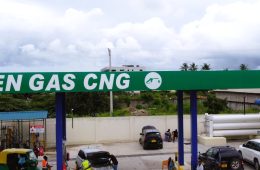
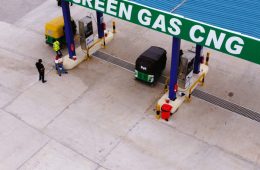
Green Gas CNG is in Mbezi, Dar es Salaam, open 24 hours a day.